



Discover Beauty and Confidence
Dive into our diverse treatment options and embark on a journey to discover your best self.
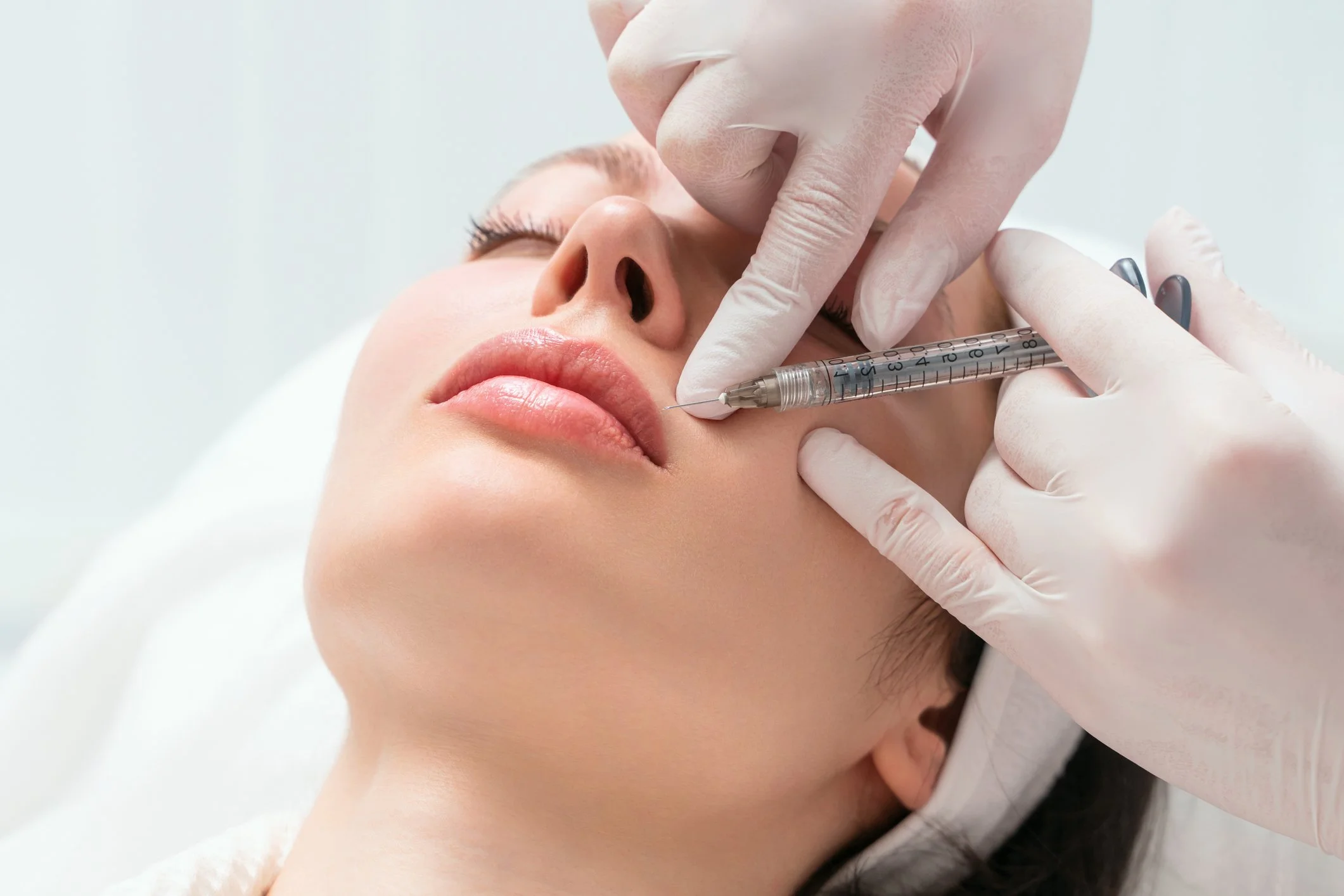
Dermal Fillers
Dermal fillers (also called soft tissue fillers or injectable fillers) are gel-like substances injected beneath the skin in medical aesthetics to restore lost volume, smooth lines and wrinkles, soften creases, or enhance facial contours. They are one of the most popular non-surgical cosmetic treatments. The main action of dermal fillers is immediate physical volume replacement — they occupy space in the tissue to "fill" areas that have lost volume due to aging, gravity, fat atrophy, bone resorption, or other factors. This creates a lifting effect, smooths static wrinkles (those visible even at rest), and improves facial proportions. Different fillers work slightly differently depending on their composition:
Most common fillers are hyaluronic acid (HA)-based (e.g.,Evolysse, Juvederm, Restylane, RHA, Belotero, Versa). HA is a naturally occurring sugar molecule in the skin that attracts and holds water — these fillers provide hydration + volume, integrate smoothly with tissue, and can be dissolved with hyaluronidase if needed.
Biostimulatory fillers (e.g., Sculptra — poly-L-lactic acid / PLLA; Radiesse — calcium hydroxylapatite / CaHA) provide some immediate volume but primarily work by stimulating the body's own collagen production over weeks to months, leading to longer-lasting structural improvement.
A few permanent/semi-permanent options (e.g., Bellafill — polymethylmethacrylate / PMMA microspheres in collagen) create a scaffold for tissue ingrowth.
Dermal fillers are versatile and FDA-approved for various facial indications (as of recent years, including 2025 updates):
Smoothing moderate to severe facial wrinkles and folds (e.g., nasolabial folds — smile lines, marionette lines, chin creases)
Restoring volume to sunken or hollow areas (e.g., cheeks, temples, under-eye tear troughs)
Enhancing facial features (e.g., lip augmentation / definition, chin projection, jawline contouring)
Improving under-eye hollows or dark circles (with careful, low-density HA fillers)
Non-surgical "liquid facelift" or mid-face lifting by adding volume strategically
Smoothing fine lines (e.g., around mouth, forehead — with softer HA products)
Hand rejuvenation or other off-label uses in some cases
Results are visible immediately (or gradually for biostimulators), with full effects settling in 1–2 weeks as swelling resolves.
Procedure
Performed in-office, usually 15–60 minutes
Topical numbing cream, local anesthetic, or fillers with built-in lidocaine are used
Injected with fine needles or cannulas at precise depths (superficial, mid, or deep dermis/subcutaneous)
Minimal downtime — most people resume normal activities immediately
Duration and Maintenance
HA fillers: typically 6–18 months (some newer formulations last up to 24 months)
CaHA (Radiesse): 12–18 months
PLLA (Sculptra): 18–24+ months (collagen stimulation effect)
PMMA (Bellafill): considered semi-permanent (5+ years)
Touch-up treatments are common to maintain results. While generally safe when performed by qualified injectors (board-certified dermatologists, plastic surgeons, or trained medical professionals), potential side effects include:
Common temporary effects → bruising, swelling, redness, tenderness, asymmetry (usually resolve in days to 2 weeks)
Less common → lumps, overfilling, Tyndall effect (bluish tint under thin skin)
Rare but serious → vascular occlusion (filler accidentally injected into a blood vessel → tissue necrosis or, extremely rarely, blindness if near eyes)
Infection, allergic reactions, or granulomas (more with certain permanent fillers)
Always choose FDA-approved products and experienced providers who understand facial anatomy and have emergency protocols (especially hyaluronidase on hand for HA fillers). Dermal fillers remain a cornerstone of modern non-surgical facial rejuvenation in 2025–2026, offering natural-looking, customizable results with relatively low risk when done properly.
